


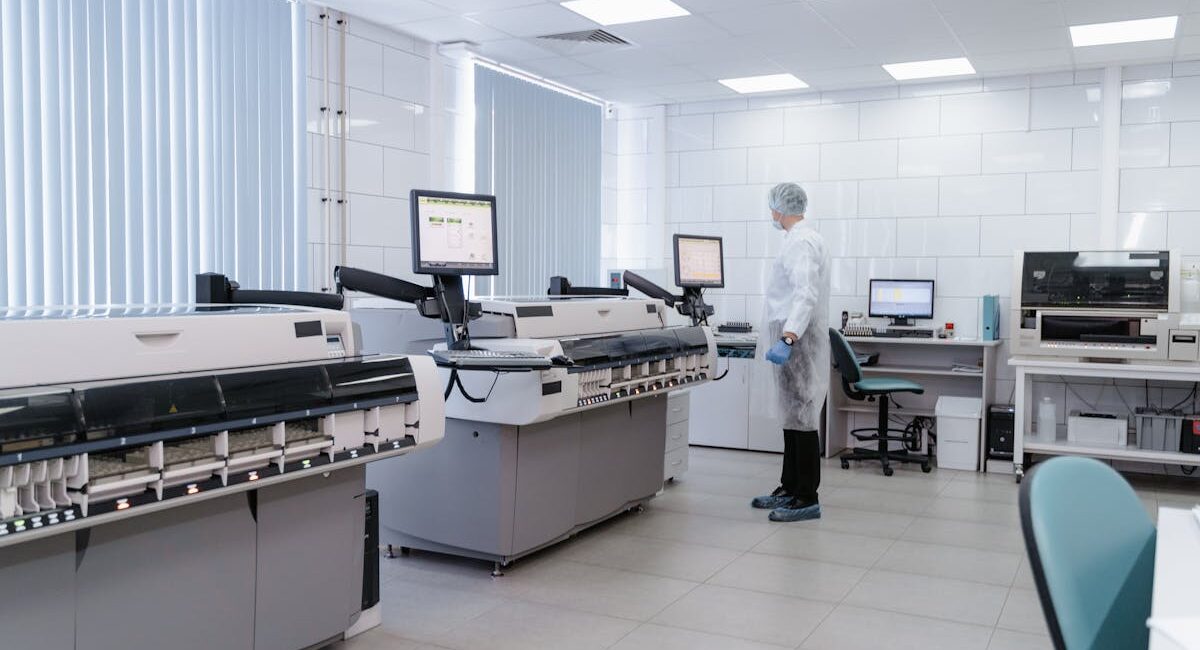
In recent years, the adoption of artificial intelligence (AI) in manufacturing and industrial processes has shifted from being a forward-thinking advantage to a competitive necessity. Among the most impactful applications is the use of Industrial Vision Systems—advanced AI-driven solutions that enable machines to “see,” interpret, and respond to visual data in real time. These systems are revolutionizing quality control, operational efficiency, and product innovation across industries.
What Are Industrial Vision Systems?
Industrial vision systems integrate high-speed cameras, sophisticated optics, and AI-driven image analysis to inspect product lines, direct machinery, and ensure processes are running smoothly. Without the delay of human observation, they’re fast — they’re inspecting, measuring, and checking assembly integrity in a matter of milliseconds. They can even be set up to identify patterns, take measurements, and ensure assembly integrity in a matter of milliseconds.
This technology finds applications across a range of industries—automotive, electronics, food and beverage, pharmaceuticals, and logistics. For example, in the food industry, AI vision systems can inspect hundreds of items per minute, identifying subtle defects or contaminants that might otherwise go unnoticed.
Advantages to Businesses:
- Improved Quality Control
Accuracy of AI-driven inspection assists companies in achieving uniform quality levels. The result is fewer faulty products getting into the hands of buyers, safeguarding the brand name and limiting waste occurrences. - Increased Productivity
Vision systems work 24/7 without fatigue. By automating inspection and monitoring, companies can reassign human labor to more complex, value-added tasks. - Cost Efficiency
Early defect detection minimizes costly recalls, reduces scrap material, and optimizes resource usage. Over time, these savings outweigh the initial investment in vision technology. - Scalability
AI vision systems are easily upgradable to accommodate new product lines and are thus future-proof investments to accommodate changing manufacturing demands.
Real-World Applications
In the autos business, AI vision is used in verification of accurate welds, checking finish coatings, and checking accurate assembly of components. In electronics assembly, micro-cracks on a printed circuit board or lost solder points invisible to the naked eye are identified through AI vision. Even supply warehouses and transportation are using vision AI to sort packages, to identify bar codes, and to track inventories.
For instance, Amazon fulfillment centers utilize AI-driven visual inspection technology to rapidly sort out damaged merchandise before shipping—an obvious sign of the technology’s effectiveness.
Getting Started with Industrial Vision Systems
For companies considering putting in place this technology, the first thing to do is to assess your line of production and identify the instances where bottlenecks occur because of inspection. Working with an experienced provider like Industrial Vision Systems means the system fulfills your operational needs, such as the desire to find defects, confirm assembly, or inspect processes.
Also Read: 10 Things to Do Before You Open Your New Business
Employee training and integration of the system with current processes are also important things to consider. AI vision systems are independently running but function best in concert with experienced teams who understand the data and make changes to the processes accordingly.
Industrial Vision and the Future of AI
In the future, machine and deep learning technologies will further enable vision systems to become more intelligent—self-optimizing, predictive of maintenance needs, and even offering product design enhancements. Companies incorporating these technologies today will be better prepared to drive their industries into the future.
Other Articles

Solo Traveling to Asia, What Should Be Prepared?
Importance of Ring Ceremony Programs in Weddings