



Table of Contents
What Exactly Is Artificial Intelligence?
Before exploring how AI is reshaping our lives, it helps to be clear on what we actually mean by the term. Artificial intelligence refers to the ability of computer systems to carry out tasks that would normally require human thinking — things like recognising speech, interpreting images, making recommendations, or spotting unusual patterns in large amounts of data.
A branch of AI called machine learning takes this further by allowing systems to improve on their own through experience, without being explicitly reprogrammed. The more data a machine learning model processes, the sharper its predictions tend to become. This is why your music streaming app seems to know you better after six months than it did on day one.
“Artificial intelligence is not one single technology. It is an umbrella term for a family of approaches — and the most powerful of them learn, adapt, and improve the longer they are used.”
According to McKinsey’s research on the state of AI, a growing share of organisations across every major industry now use AI in at least one part of their operations — a proportion that has risen steadily with each passing year and shows no sign of slowing.
How AI Is Changing the Modern Workplace
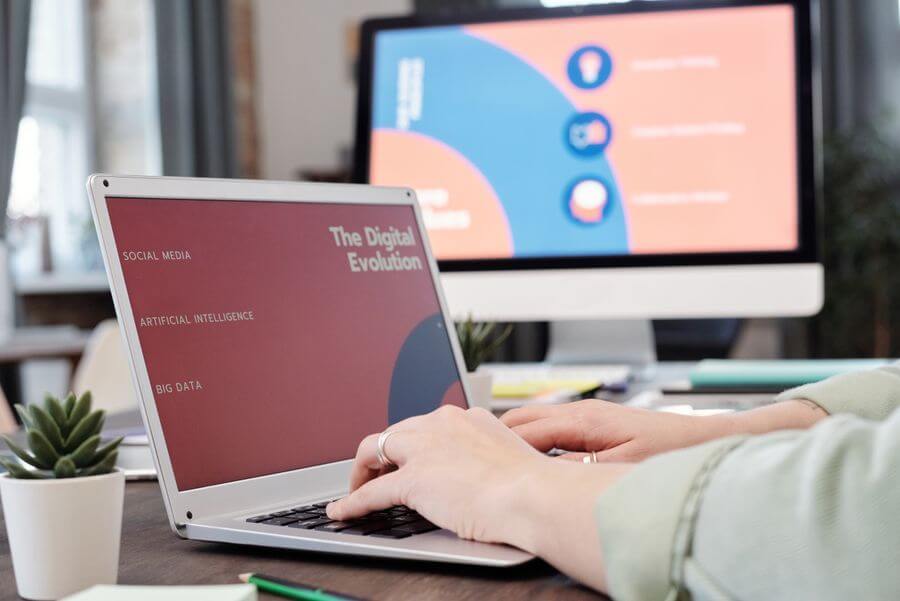
Walk into almost any modern office — or open any remote worker’s laptop — and you will find AI embedded in the tools people use every day. Spell checkers that understand context, meeting transcription software, smart email filters, fraud detection systems in finance, inventory forecasting in retail. None of these feel extraordinary anymore, which is precisely the point.
Automating the Repetitive, Freeing the Human
One of the most immediate effects of AI in the workplace is the automation of tasks that are high in volume but low in complexity. Data entry, basic customer queries, appointment scheduling, document sorting — these are areas where AI tools now handle enormous workloads with speed and consistency that no human team could match at scale.
What this does, in theory, is free people up for work that genuinely requires human judgement, creativity, or emotional sensitivity. A customer service team, for instance, might let an AI chatbot handle straightforward account queries while human agents focus on complex or distressed cases that need real empathy and discretion. The division of labour, when done thoughtfully, can make both the AI and the human more effective.
Decision-Making Gets a Data-Driven Partner
In industries from banking to agriculture, AI is now acting as a decision-support tool — analysing complex datasets far faster than any analyst could, and surfacing insights that inform better choices. A loan officer still makes the final call, but an AI system flags risk patterns, suggests comparable cases, and highlights inconsistencies in an application that a tired human eye might overlook.
This collaborative model — human expertise guided by machine intelligence — is becoming the dominant pattern across professional services. It is not about replacing skilled people. It is about giving them a sharper instrument.
Remote Work and the AI-Assisted Office
The widespread shift to remote and hybrid working created a demand for tools that could keep distributed teams productive. AI stepped into that gap quickly. Real-time transcription and translation software now allow global teams to communicate across language barriers with minimal friction. Smart scheduling tools analyse availability and time zones automatically. AI writing assistants help professionals draft clearer documents in less time.
For many workers, especially those managing heavy communication loads, these tools have reduced cognitive fatigue in a meaningful way — not because the work has disappeared, but because the administrative weight of it has become lighter.
AI in Everyday Life: Beyond the Office
The influence of artificial intelligence does not clock out when the working day ends. It continues shaping experience in kitchens, living rooms, doctors’ waiting areas, and schools. Many of these effects are so familiar by now that people rarely pause to consider the technology behind them.
Healthcare: Earlier Warnings, Better Outcomes
Perhaps nowhere is the potential of AI more significant — or more debated — than in healthcare. AI-powered diagnostic tools can now scan medical images for early signs of conditions like cancer, diabetic retinopathy, and cardiovascular disease with a level of precision that rivals experienced specialists. In some cases, these systems detect abnormalities that human reviewers missed.
Beyond diagnostics, AI is being used to personalise treatment plans, predict patient deterioration in hospital wards, and accelerate drug discovery timelines that once took decades. According to the World Health Organization’s guidance on AI for health, these applications hold genuine promise for improving care in regions where specialist access has historically been limited.
That said, healthcare AI is not without its challenges. Questions around data privacy, algorithmic bias, and the importance of keeping a human clinician accountable for every care decision remain very much alive — and rightly so.
Education: Learning That Adapts to You
Traditional education has always faced a fundamental tension: one teacher, many students, each with different learning speeds and styles. AI is beginning to address that tension in practical ways. Adaptive learning platforms adjust the difficulty, pace, and content of lessons based on how each student is performing in real time — effectively giving every learner a curriculum that responds to where they are, not just where the syllabus says they should be.
Language learning apps already do this well, presenting vocabulary and grammar exercises at the precise level where a learner is working — neither too easy nor too discouraging. The same principle is being applied across subjects and age groups, from primary school maths to professional certification courses. For an in-depth look at how technology is reshaping education at every level, the Education section on Adobuzz explores related themes worth reading.
Smart Homes and Daily Convenience
The home has quietly become one of the most AI-saturated environments in modern life. Smart thermostats learn household routines and adjust temperature automatically to save energy. Voice assistants answer questions, control lighting, and manage shopping lists. Security cameras analyse movement patterns and alert homeowners to anything unusual. Even household appliances now carry AI features — washing machines that sense fabric type, ovens that adjust cooking times, refrigerators that track their own contents.
None of this is magic. It is pattern recognition applied at scale, learning what a specific household tends to need and acting on it. The convenience is real, even if the underlying mechanism is prosaic.
Quick Summary: Where AI Is Already Active in Daily Life
- Work: Automating routine tasks, supporting decision-making, enhancing communication tools
- Healthcare: Diagnostic imaging, patient monitoring, drug discovery assistance
- Education: Adaptive learning, personalised feedback, automated grading support
- Home: Smart thermostats, voice assistants, security and energy management
- Shopping: Personalised recommendations, dynamic pricing, demand forecasting
- Transport: Navigation, predictive maintenance, semi-autonomous vehicle features
The Human Questions AI Cannot Answer For Us
It would be easy to read this far and conclude that the story is entirely positive — and there is much that genuinely is. But a balanced view of artificial intelligence also requires sitting with the harder questions it raises.
Jobs, Skills, and the Fear of Being Left Behind
The anxiety around AI and employment is real, and it deserves honest engagement. Certain categories of work — particularly those involving predictable, repetitive tasks — are being automated at pace. For people whose livelihoods depend on those tasks, the disruption is not an abstract debate; it is a practical reality.
History suggests that technological shifts of this kind eventually create more jobs than they displace, but history also shows that the transition is rarely smooth or evenly distributed. The workers who benefit most from AI tend to be those who can use it as a tool — who understand enough about what it can and cannot do to direct it usefully. Building that understanding has become one of the most important things any working adult can invest time in right now.
Bias, Fairness, and Who Gets to Design the Algorithm
AI systems learn from historical data — and historical data reflects historical biases. Hiring algorithms trained on past hiring decisions can inadvertently replicate past discrimination. Facial recognition systems have shown poorer accuracy for darker skin tones. Credit-scoring models can disadvantage applicants from certain postcodes in ways that correlate strongly with race or class.
These are not hypothetical risks. They are documented patterns that researchers, regulators, and ethicists are actively working to address. Fairness in AI is not a problem that technology alone can solve; it requires diverse teams building systems, diverse communities having input into how those systems operate, and meaningful accountability when things go wrong.
Privacy and the Data We Give Away
Every AI-powered service runs on data, and much of that data comes from users — often without a particularly clear-eyed understanding of what is being collected or how it is used. The personalisation that makes a recommendation engine feel intuitive relies on detailed behavioural profiles built up over time.
Being thoughtful about which services have access to personal data, reading privacy settings with genuine attention, and understanding the basic terms of the exchange between convenience and data sharing are habits that matter more now than they did a decade ago.
Where Things Are Headed: A Realistic View
Predicting the future of any technology is an exercise in informed humility. The history of innovation is littered with confident forecasts that turned out spectacularly wrong in one direction or another. That said, a few directions in AI development seem reasonably clear.
Generative AI — the category of tools that can produce text, images, code, and audio from natural language prompts — is developing quickly and is likely to become as standard a part of knowledge work as spreadsheets or search engines. The ability to collaborate effectively with these tools, to prompt them well and critique their output critically, is becoming a broadly useful skill across professional fields.
At the same time, the regulatory environment around AI is maturing. Governments and international bodies are working on frameworks to govern how AI systems are built, tested, and deployed — particularly in high-stakes domains like healthcare, criminal justice, and financial services. This is a slow and imperfect process, but it is happening.
The most grounded expectation is probably this: artificial intelligence will continue to become more capable, more embedded, and more ordinary. The genuinely transformative opportunities — and the genuinely serious risks — will both require human wisdom to navigate well.
Frequently Asked Questions
How is artificial intelligence changing the way we work?
Artificial intelligence is automating repetitive tasks, supporting faster and more accurate decision-making, and giving workers tools that improve productivity across a wide range of industries. From smart scheduling assistants to AI-powered data analysis, it is making workplaces more efficient without necessarily eliminating the need for skilled human judgement.
What is the impact of AI on everyday life?
AI affects everyday life through personalised recommendations, smart home devices, healthcare diagnostics, navigation apps, and voice assistants. Most people already interact with AI dozens of times a day — often without realising it is happening.
Will artificial intelligence replace human jobs?
AI is changing the nature of many jobs rather than simply eliminating them. While it does automate routine tasks, it also creates demand for new roles in AI oversight, data management, and human-centred problem-solving. Workers who learn to use AI as a tool are generally better positioned than those who avoid it.
How does AI help in healthcare?
AI assists in healthcare by analysing medical images, predicting patient risks, speeding up drug discovery, and enabling more personalised treatment plans — often with greater accuracy and speed than traditional methods alone.
Is AI technology safe for personal use?
Most consumer-facing AI tools are safe to use, but it is important to be aware of data privacy settings and terms of service. Understanding what data a service collects and how it is used is a reasonable habit for any adult using AI-powered apps and platforms.
Final Thoughts
Artificial intelligence is not arriving — it has already arrived. It lives in the tools we work with, the devices in our pockets, the systems running behind the websites we visit and the services we depend on. The question is no longer whether AI will change the way we work and live. It already has. The more useful question is how each of us chooses to engage with that change.
Learning to work alongside AI tools rather than simply waiting to be acted upon by them is, increasingly, a form of agency. It does not require becoming a data scientist or an engineer. It requires curiosity, a willingness to ask what a given tool is actually doing, and a healthy scepticism about both the hype and the fear that tend to surround new technology in equal measure.
The technology will keep improving. The human capacity to direct it wisely — to ask good questions, make sound ethical choices, and stay grounded in what actually matters to real people — that is the part that no algorithm is going to replace any time soon.
Other Articles

Enjoy Healthy Sexual Life By Increasing Blood Flow